
Industrial Control Systems Are Now the Front Line of Cyber Security
14 Apr, 202610 minutesFor years, cyber security conversations inside most organisations centred on laptops, email ...

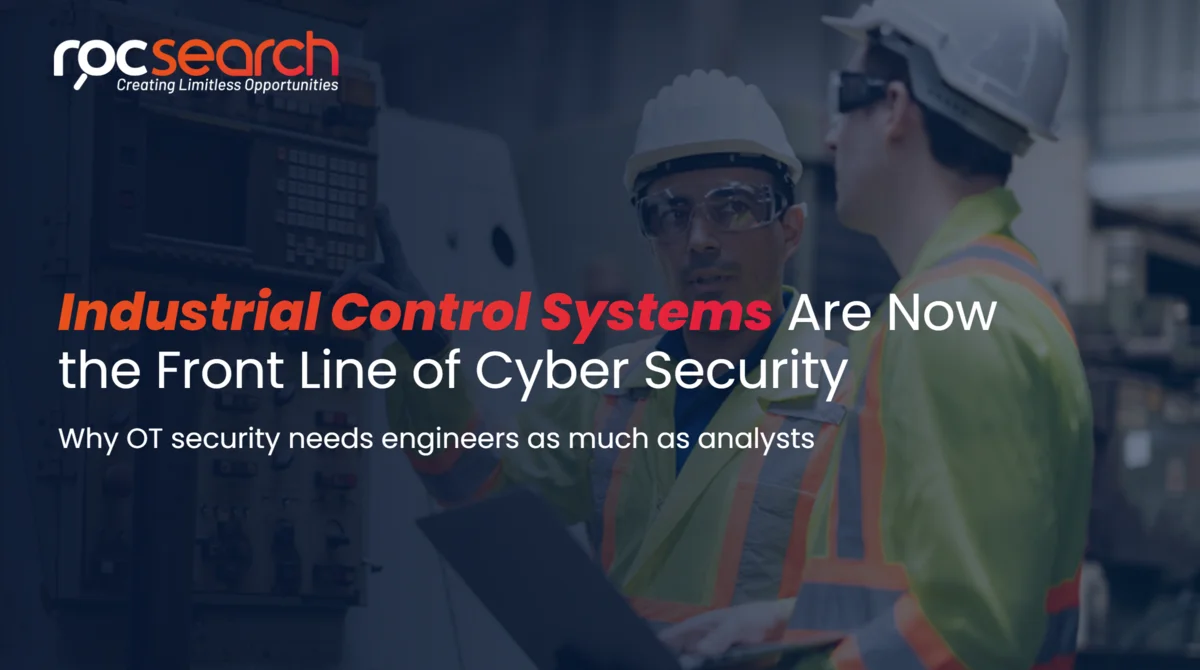
For years, cyber security conversations inside most organisations centred on laptops, email and cloud accounts. April 2026 was a reminder that the systems running water treatment plants, energy networks and factory floors are just as exposed, and in many cases far less prepared.
Early in the month, reports emerged that Iran-linked hacking groups were targeting industrial controllers inside US infrastructure. These are the programmable logic controllers and supervisory systems that open valves, regulate pressure, switch power and keep production lines moving. They were never designed with internet-scale threats in mind, and many have been running quietly for decades.
At the same time, the US Cybersecurity and Infrastructure Security Agency (CISA) gave federal agencies a two-week deadline to patch a Microsoft Defender zero-day, and financial institutions were raising concerns about the cyber capabilities of the newest frontier AI models. Taken together, April painted a clear picture: attackers are getting faster and better resourced, and the attack surface now extends well beyond IT.
Why OT is different
Operational technology (OT) has a different set of priorities from corporate IT. In an office network, confidentiality usually comes first. In a plant, availability and safety come first. You cannot simply reboot a turbine controller to apply a patch, and a misconfigured security tool can cause as much disruption as an attacker.
That creates a skills problem. Securing OT requires people who understand both cyber security and the engineering realities of the environment they are protecting. They need to know how industrial protocols behave, how safety instrumented systems work, and how to segment networks without breaking processes that have been tuned over many years.
Historically, these two disciplines sat in different departments. Control engineers looked after the plant; the IT team looked after everything with a keyboard. As more industrial equipment has been connected for remote monitoring, predictive maintenance and data analytics, that separation has collapsed. The plant is now on the network, whether the organisation planned for it or not.
What organisations are doing about it
The companies handling this best tend to share a few habits.
They map what they have. Many operators do not hold a complete inventory of their connected industrial assets. Building one is unglamorous work, but it is the foundation of everything else.
They segment aggressively. Separating OT networks from corporate IT, and limiting the routes between them, reduces the blast radius when something goes wrong.
They bring engineers and security teams together. Joint incident response planning, shared ownership of risk and regular tabletop exercises help both sides understand what is at stake.
They plan for long lifecycles. Industrial equipment may stay in service for twenty years or more. Security strategies need to account for legacy systems that cannot be replaced quickly, using compensating controls where patching is not possible.
The talent gap
All of this depends on people, and the supply of people who can work confidently across IT and OT is limited. Roles in demand include:
- OT and ICS security engineers
- Industrial network architects
- Security-focused controls and automation engineers
- Incident responders with experience in critical infrastructure
- Governance and compliance specialists familiar with sector regulation
Many of the strongest candidates come from engineering backgrounds and have moved into security, rather than the other way round. They understand why a plant manager is nervous about change, and they can explain risk in terms that operations teams accept.
For hiring managers, that means looking beyond traditional security CVs. A controls engineer with a strong interest in networking and a few years of hands-on SCADA experience may be a better long-term hire than a generalist security analyst with no exposure to industrial environments. Training the security knowledge is often easier than training the engineering intuition.
A board-level issue
April's headlines also show why OT security has become a board-level concern. Disruption to physical infrastructure carries consequences that a data breach does not: safety incidents, environmental damage, regulatory penalties and the loss of public trust. Insurers are asking harder questions, and regulators in several regions are tightening expectations for critical national infrastructure.
Boards increasingly want a clear answer to a simple question: if someone gained access to our control systems tomorrow, how quickly would we know, and what could they do? Answering it honestly requires investment in tools, processes and, above all, specialist people.
Looking ahead
The threat to industrial systems is not new, but its profile has risen sharply. State-linked groups are probing infrastructure, AI is lowering the barrier to sophisticated attacks, and more equipment is connected every year. Organisations that treat OT security as an engineering discipline, staffed by people who understand both the technology and the process, will be far better placed than those that treat it as an extension of the IT helpdesk.
At Roc Search, we work with engineering and technology leaders building teams across critical infrastructure, energy, manufacturing and utilities. If you are looking to strengthen your OT security capability, or you are an engineer considering a move into the field, we would be glad to talk.
Related Posts
The Chip Engineer Shortage: 157,000 Roles and Counting
24 Sept, 2026
AI Is Changing How Chips Are Designed
17 Sept, 2026