2026: The Year of the Forward Deployed Engineer
24 Nov, 2026


The story of artificial intelligence is usually told through models, chips and software. In ...

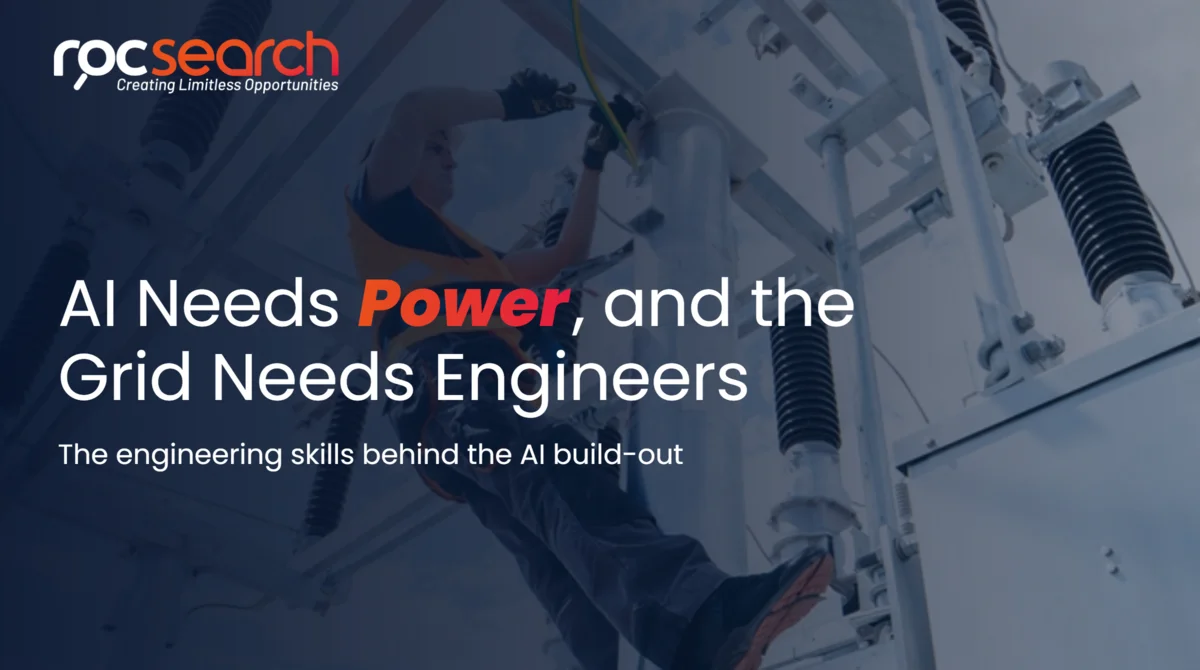
The story of artificial intelligence is usually told through models, chips and software. In April 2026, a different part of the story moved to the centre: electricity. The infrastructure required to power AI is now one of the biggest engineering challenges of the decade, and it is creating sustained demand for skills that have nothing to do with writing code.
In mid-April, reports showed that America's largest investor-owned utilities were preparing for a spending cycle worth around $1.4 trillion, driven by AI data centres, grid upgrades and transmission bottlenecks. Microsoft was described as scrambling to secure data centre capacity. Days later, Amazon and Anthropic announced an expanded partnership that included up to 5 gigawatts of AI capacity.
Yet demand is running ahead of delivery. Earlier in the month, analysis suggested that nearly half of the US data centres planned for 2026 were facing delays or cancellation. Local opposition to new facilities was growing, and public trust in AI was falling.
The gap between ambition and what can actually be built comes down to physical constraints: grid connections, transformers, substations, cooling, planning consent and the people needed to design and deliver all of it.
A modern AI data centre can draw as much electricity as a small town. Connecting one to the grid is not a quick job. It may require new high-voltage lines, upgraded substations, reinforced local networks and careful coordination with system operators who must keep supply stable for everyone else.
Grid equipment also has long lead times. Large transformers and switchgear can take years to procure. Transmission projects can take longer still, particularly where planning and land rights are involved. As a result, the availability of power, rather than the availability of chips, is increasingly deciding where and when AI capacity gets built.
Operators are responding in several ways: locating near existing generation, investing in on-site power, signing long-term renewable and nuclear agreements, and redesigning facilities to use energy and water more efficiently. Each of these requires specialist engineering input.
The AI power challenge is producing steady demand across a wide range of disciplines:
Many of these roles sit in utilities, engineering consultancies, contractors and equipment manufacturers rather than in technology companies. That broadens the competition for talent. A substation engineer may now be weighing offers from a regional utility, a hyperscaler, a data centre developer and a renewables firm at the same time.
The challenge for employers is that this talent pool was already stretched before AI arrived. Energy transition projects, electrification of transport and heat, and ageing grid infrastructure were all drawing on the same engineers. AI has added another large source of demand on top.
Organisations that hire well in this market tend to move quickly, offer clear career progression and give engineers interesting technical problems to solve. Flexibility around location helps, although many roles require time on site. Some employers are also investing more in graduate and apprenticeship schemes, recognising that buying experienced talent alone will not close the gap.
For engineers, it is a strong market. Experience in grid connection, high-voltage design or large-scale cooling is now highly transferable, and many professionals are finding their skills valued in sectors they had not previously considered.
April also showed that technical delivery is only part of the job. Residents in several areas were opposing new data centres over concerns about noise, water use, land and energy prices. Projects that fail to engage communities early are more likely to face delays.
This is creating demand for people who can bridge engineering and stakeholder management: project leads who can explain trade-offs clearly, sustainability specialists who can demonstrate real benefits, and planners who understand how to bring a scheme through consultation.
The pace of AI investment shows no sign of slowing, and every new model and data centre adds to the load on the grid. The organisations that succeed will be those that treat power as a first-order engineering problem and build teams capable of solving it.
Roc Search supports energy, infrastructure and technology businesses hiring the engineers behind this build-out. Whether you need to scale a grid connections team or you are an electrical engineer exploring new opportunities, get in touch.